Skip to content

Blog

Journal Archive

Essays, stories, and updates from Corie Adjmi.

A Tip for My Uber Driver

June 2, 2015

A Tip for My Uber Driver

I’m a nervous traveler so when my Uber driver informed me about two accidents and huge delays on the 405, he contributed to my already high anxiety. After riling me up, he tried to calm me down by assuring me that LAX was pretty cool about allowing check-in as close to 30 minutes before flight time. I’d planned my arrival at the airport, allotting one hour and 15 minutes before flight time. (I like to stand in long lines at Starbucks and get coffee before a flight.) 30 minutes was not going to cut it. I was not happy. And then to top things off, my driver wouldn’t stop talking. He talked even though I read emails, head down. He talked even when I gave one-word answers. He talked and talked and talked. And then I started to worry. Was my Uber driver judging me? It was in Maureen Dowd’s article, Driving Uber Mad, that I learned Uber drivers rate their passengers. And it did cross my mind, since I wasn’t in the mood to chat, that he could find me unpleasant and consequently, give me a bad rating, which would make other drivers wary of picking me up in the future. On my behalf, I will disclose, I’d just completed a grueling weekend where, over four days, I hiked a total of 36 miles, a great deal of it uphill. And some at 18% incline. I was exhausted, totally wiped out. And I’d spent four days in a group. I needed to unwind. I needed to spend time in my own head. I needed a blog post idea. I can reason about all of this now, in retrospect. But at the time, I felt bad about being unfriendly. Was I being mean? Rude? Reluctantly, I listened as he talked about L.A. traffic, his previous fare and how he kept his car clean. I listened to how he used to live on the east coast, and that even though most people in the east like the foliage and the fall; he preferred spring. And then the conversation veered when he said, “I’d like to get a five star rating from you. If there were any issues with this ride, I’d like to hear your comments. Just be upfront.” As much as I wanted to say, “Besides your non-stop talking everything was fine, I simply said, “I’ll give you five stars.” After all, as far as service went, I convinced myself, he’d done a good job. In the end, because of his navigation system, his determination in maneuvering away from the 405 and his constant up-to-the-minute reporting, it appeared I was going to get to the airport on time. The only problem with the ride, I deduced, was my mood, and that I wanted some quiet. And then he asked, “You want to know your rating?” Over the weekend, everything I did was rated in numbers: how many miles I hiked, how much I weighed, how many inches I lost. This was just one more scale I could place myself on. “Sure,” I said feeling confident. (You’d feel confident too if you’d hiked 36 miles in four days and lost eight inches.) “You know, only a cool driver would tell you your score.” He glanced at me through the rearview mirror. I waited patiently for my results to appear. “4.8,” he said. I didn’t think that was so bad but according to my driver, it wasn’t good. And I wondered what I’d done that got me less than five stars. “WHAT? WHY?” I asked, all of a sudden feeling knocked down a peg (or .2). “I don’t know,” he chuckled. And I could tell he was thrilled to reveal this less than perfect (and supposed to be private) score. He went on to say that the rating system was flawed, that someone gave him four stars because his car wasn’t clean. “Look around,” he said. “My car is spotless.” And to his credit, it was. He told me that he thought I was the perfect customer. He said that I was respectful and I hadn’t kept him waiting. “Unless someone throws up in my car or is disrespectful, they get a five,” he said. “Well, I’ve never thrown up in an Uber. And I’ve never been disrespectful.” “I have a friend,” he said, “who gives a four to anyone who doesn’t tip.” “Wait a minute,” I said. “Tip? You don’t tip Uber. That’s the point. That’s the best part of Uber. Isn’t the tip included in the price?” SIDE NOTE: Even though I consider myself a good tipper, I have to admit, I hate tipping. Especially after drinking a glass of wine at dinner. I hate that it’s arbitrary. I hate that I have to do mental math. Just last week, at a restaurant in L.A, my bill came on a touch pad and all I had to do was press 15%, 18% or 20% tip. I pressed 20% and the total was added for me. All I had to do was swipe and sign. Brilliant. That I didn’t mind. ***** What was my Uber driver trying to tell me? Was he going to take away a star if I didn’t tip him? “Actually,” I said, “I thought you weren’t supposed to tip.” “Well, it is discouraged,” he admitted. But then he went on to tell me about the price of gas and how it’s gone up. He told me he believed the Uber App should have a place to add a tip. And since I loved the aforementioned experience at the L.A. restaurant, I agreed that would be a good solution, even though I’d only moments before learned there was a problem. As he pulled up to the curb at LAX, my driver said, "It’s because the founder of Uber doesn’t believe in tipping.” Like-minds! Me too, I wanted to scream. SIDE NOTE #2: Don’t misunderstand. The way things are set up presently in restaurants and beauty salons, for example, tipping is important. And tipping generously is even, in my view, a moral obligation. Workers rely on their tips to make ends meet, to put food on their tables. But there's a problem with tipping. It’s too subjective and when to do it is not always obvious. And of course how much to tip is suspect to fluctuating or arbitrary criterion like mood swings or income level. Why not have flat rates? A standard tip included. I thought Uber was on to something. Why should a worker’s income be placed in my hands, or any (cranky or lazy or stingy) customer’s hands, and not their employer’s hands? ***** As my Uber driver helped me lift my luggage from his trunk, I said, I’ll trade you five stars for five stars.” He laughed and said, "Okay." But I’ve been thinking. Maybe I shouldn’t have been so quick to make a deal. Maybe I should’ve given him four stars (or less) for chewing my ear off for over an hour and trying to manipulate me into giving him a tip. The ride, overall, was an uncomfortable reminder that we are always being graded or weighed or rated or judged. Here’s a tip Mr. Uber driver- Proceed with caution. Yes, you’re in the driver’s seat and can steer conversations wherever you want; but your passengers shouldn’t feel trapped as if the air bag has just blown up in their face. Someone less congenial might take away a star, or two.
Let the Children Play

May 26, 2015

Let the Children Play

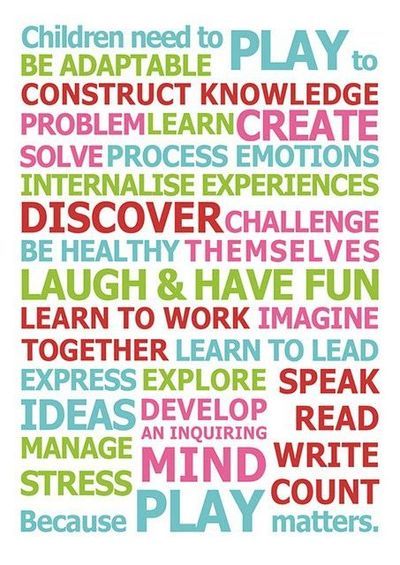
When I was in kindergarten, my school day ended at noon. My teacher played the piano and my class sang along. She read out loud to us, The Carrot Seed and Are You My Mother? In all fairness, I do remember a pencil can in the middle of our communal table and echoing the words to a Dick and Jane book. But mostly, I remember Green Trees. Yes, that’s right our playing field had a name. And I recall, vividly, a seesaw and running and playing tag. Twenty years later, things were different. My son’s kindergarten day ended at 3:00. He was not yet 5, but the first thing his teacher told me at his parent conference in November was, “He still wants to play.” She said this as if this was a bad thing and that something had to be done if my son was to succeed at all. Being an NYU student who was majoring in education, I ignored her. Well, that’s not exactly true. I talked about her endlessly to anyone who would listen, wondering why someone who obviously knew nothing about children or education was allowed to teach. The year before, when my son was 4, his teacher raved at our parent conference about how he had a glowing imagination. She reported that he could brilliantly story tell, recall details from stories he’d been told and had a flare for description. And most importantly, he had a twinkle in his eye and a smile on his face. So you can imagine my surprise when his kindergarten teacher did not feel the same way about his development and wanted him to sit still longer and pay attention better. This child of mine had learned to tie his shoes the previous summer while he was still 4; but when I showed up in April to help out in his classroom, his teacher looked at me, pointed to my son’s untied shoe laces and said, “It’s time he learn to tie his shoes.” Why had my son played (pun intended) like he couldn’t tie his shoes throughout most of the year? And what else had he pretended he couldn’t do? According to Let the Kids Learn Through Play, a New York Times piece, academic teaching in kindergarten can backfire. It can cause unnecessary stress and spoil a child’s desire to learn. Jay Giedd, a neuroscientist, spent his career studying how the human brain develops and says that most kids younger than 8 are better suited for exploration than they are for didactic explanation. Formal education at an early age will not foster people who can discover and innovate; and in fact, may result in children earning lower grades than children who had the opportunity to learn through play. My grandson is now learning to read and it’s as if this generation of teachers and educational policy makers still did not get the memo: Children learn through play. It is essential for their development, not to mention their happiness and overall well-being.

All (Fat) Talk and No Action

May 19, 2015

All (Fat) Talk and No Action

When I was young, I had an aunt who repeatedly called herself fat. I believed her. But she wasn’t. In The Problem With Fat Talk, Renee Engeln reports that in a 2011 survey, 90 percent of college woman admitted to engaging in fat talk. Only 9 percent of them were actually overweight. Shaming the body is a big deal. It makes people feel bad and it brings others around them down too. Plus, it's contagious. Studies show that fat talk is common in women across all ages and all body sizes. For most of my life, I was spared that destiny. I didn't engage in fat talk, count calories, compare low fat diets or eliminate carbs. I could eat as much as I wanted and was still naturally thin. Until I wasn’t. Or until I thought I wasn’t because technically I was still thin, just not as thin as I’d always been. My body started changing in my forties when I grew a fibroid the size of a honeydew. (I know in my post Attachment Theory, I said it was expected to be the size of grapefruit; but it wasn't.) It was huge and I wasn’t used to having to hide parts of myself under clothing. Around that time, feeling defeated, I succumbed and began fat talking. But the fibroid was removed 9 months ago, and up until a month ago, I was still at it. Fat Talking, I mean. I’d stopped exercising, gained some weight and felt bad about it. I was fat talking myself into a tizzy and I didn’t recognize myself. Who was this woman talking about getting fat all the time? And then one morning, I had enough. I booked a stay at a spa. Four days of rigorous hiking, exercise and diet. I did this to take care of myself. I’ve always believed exercise was important and I couldn’t believe how I let myself get so out of shape. Not literally as in my physical shape (although that too) but strength-wise. I used to be athletic: a cheerleader, a track runner, a tennis player. How was it that a set of stairs had me huffing and puffing? For a month now, I’ve been exercising regularly; Pilates, treadmill, weight training, stretching, a little bit more each day. I’ve been cooking with less oil, reading lists of ingredients and drinking water with lemon and cayenne pepper. It’s only been a couple of weeks so it’s not that I look all that different; but I certainly do feel different. I have some goals: build strength and tone. And never again let myself be all (fat) talk and no action.

Are You Turning Into Your Mother?

May 12, 2015

Are You Turning Into Your Mother?

I’m turning into my mother. That’s not a bad thing but it is curious. Mostly because I used to think we were nothing alike. My mother is extremely organized. I tend to be less so. She would’ve never made the mistake I made, which is that this post is a Mother’s Day post and it should’ve been posted last Tuesday, a few days before Mother’s Day, not after; but I got confused, which I do sometimes, and that’s why the post is late, which is another way we differ because my mother is never late. And I mean never. This is the kind of mishap that has driven my mother to call me flighty, which no one has ever called her. My mother is disciplined and straightforward. I am less disciplined and more artsy, which is to say emotional; or as she would say, all over the place. So I’ve held the belief we were nothing alike. But when we both showed up wearing the same thing on a number of occasions, I began to wonder. In addition, I’ve begun to speak as she does, which is significant because she uses words like boondocks and expressions like… A feather in my cap and The early bird catches the worm. I start many a sentence, when I’m talking to my kids, with “As grandma would say," and then I say things like… I’ll eat my hat or Don’t count your chickens before they hatch. They tell me I can’t do that. They tell me if I continue to use those phrases, I can’t pretend I’m not really using them. And I've come to realize my mother and I are alike in other ways as well. We both get nervous when we travel, don’t do well in traffic and are electronically challenged. We both love coffee and hate shopping. But here’s the thing I’ve only recently realized about how we are much more alike than I ever before thought. My mother was an avid tennis player, and a winner too. She played for hours in the brutal New Orleans heat throughout my childhood. And when we moved to New York in 1980, she and her mixed doubles partner were ranked (by the United States Tennis Association) number one in the east. As a little girl, she hit tennis balls with me, teaching me the game. “It doesn’t have to be the best shot. But never give up. Just get the ball over the net one more time,” she’d say. “That’s how you win.” What she taught me was perseverance. Yes, it takes talent and dedication to craft to be a writer but what it takes even more than those things is perseverance. I read that a number of years back, and it stuck with me; because I believe it to be true. I could’ve given up a long time ago; but I didn’t. And that determination is paying off. As my mother would say, the apple doesn’t fall from the tree.

Your Brain and Love

May 5, 2015

Your Brain and Love

What would it look like if you put your marriage (or love relationship) first? (Before work, before your friends, before yourself?) What would it feel like if you could count on your spouse for security and safety? (No matter what.) What if your marriage/ partnership wasn’t about you? What if it was about itself? These are some of the questions presented in Stan Tatkin’s book, Wired for Love. Tatkin, writes about “conscious partnership”, which is a commitment to the needs of the relationship rather than to the needs of the self. He suggests couples create a Couple Bubble, a mutually constructed cocoon that holds a couple together and protects each partner. The Couple Bubble Agreement is, “We Come First”. Tatkin discusses attachment theory, which focuses on the bonds between parent and child. Tatkin suggests that how individuals attach as children (securely attached, insecurely avoidant, ambivalently attached) has a direct correlation to how one will bond in a romantic long-term relationship. Those early experiences, where we get our sense of safety and security, are the blueprint for our relational wiring. The bad news is that if your early experiences didn’t go well, your adult relationships might suffer. The good news is that in this new paradigm for couplehood, which integrates recent brain research with ideas of attachment theory, you can rewire your brain; and realize a secure and healthy adult relationship. Basically, it’s using science to make your love relationship work. Wired for Love proposes ten guiding principles, which I found highly beneficial. Ultimately your partnership has the potential to minimize each other’s stress and optimize each other’s health. I wish I’d had this book early on in my relationship. I might’ve done so many things differently. But I have a bunch of weddings coming up and I can’t think of a better gift.

Are You A Control Freak Parent?

April 28, 2015

Are You A Control Freak Parent?

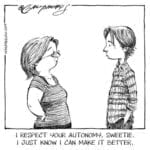
The following is not a joke. I know a mother who considered faking a robbery (jewelry, passports, iPad) from her Mexican hotel room safe so that her college-age son couldn’t return to school in the United States before their family vacation was over. Parenting is tricky and while there is no one “best” way to parent, I’m pretty certain that stealing your son’s passport so that he is unable to leave the country isn’t a good thing to do. “What we are teaches the child more than what we say, so we must be what we want our children to become.” Joseph Chilton Pearce. (Unless she wanted her child to be a thief or a custom’s agent, taking his passport wasn’t an ideal solution.) Most parents, at some point or another, have probably manipulated their children and not with bad intent. They honestly believe they know better. And I’m as guilty as any parent. Once, I insisted my first grader recreate the solar system for his science fair project when he wanted to make a… Isn’t that interesting? I can’t even remember what he wanted to make. That was a long time ago; and I’ve learned, over the years, not to micro-manage my children. Not only is it not helpful, it’s harmful. According to Debbie Pincus MS LMHC, a parent who micromanages their child’s life will answer “yes” to one or more of these questions: Must it be your way and only your way? Are you always right? Do you threaten, lecture, warn, or order your kids around in a barking kind of tone? Do you often do things your child can do for himself because you think you can do it better or “the right way?” Do you tend to make decisions for your child? Do you often use bribes to get him to do what you want him to do? Do you give him little freedom to think for himself? I wish I could take back the time my 3-year-old son wanted to buy red sneakers and I wanted him to buy black ones. I couldn’t get him to agree with me, so I didn’t tell him but I told the salesperson to wrap up the black ones. Later that night, when he opened the box to show his father his new red sneakers, I cannot describe the disappointment on his face, in his body, when he saw black sneakers. I knew at that moment I had made a colossal mistake and went back the next day for the red ones. What made me think I was right or that I knew better? As much as I hate thinking about that memory, and how deflated my son was knowing I’d tricked him, I know it was then that I decided never again. Since then, he’s gone through many phases: worn his jet-black hair with a streak of blonde, both long and short. He’s grown a beard and still wears (in my view) the most outrageous sneakers. Childhood trauma. It shows up in the most uncanny ways. BLOG-RED PLAID SNEAKER BLOG-BLACK SNEAKER W:METAL BLOG-GREY PLAID SNEAKER BLOG-BL

Earth Day 2015

April 21, 2015

Earth Day 2015

Once while peeling an apple for my kids, my husband came up behind me and said, “You’re grandfather would roll over in his grave if he saw how you were peeling that piece of fruit.” And he was right. I was peeling quickly and using a knife. Too much of the fruit was being discarded with the peel. My grandfather didn’t waste anything: not money or food. He grew up poor and became a wealthy man; but his humble beginnings had him buying in bulk and clipping coupons. Some of my grandfather’s ways trickled down to me; and I get made fun of- a lot! I get accused of closing the lights in a room while people are still in it, for eating the garnish on my plate and for using every inch of a piece of paper. It’s accurate that just like my grandfather I can hardly tolerate waste. And so a couple of years back, working as the Sustainability Coordinator at my husband’s apparel company, was a like a dream come true. It was a perfect match, a great way for me to direct my familial quirks into timely and meaningful work. My motto: No waste! First, the company got rid of Styrofoam cups that would’ve out lasted the next four generations, if not more. We changed the lights to compact fluorescent bulbs and switched to recycled paper. We sent e-cards for Christmas and saved paper and money. We changed to a filtered water system eliminating water bottle deliveries and water bottles. But my favorite initiative was donating to Material for the Arts. MFTA collects reusable materials from businesses and individuals and makes them available, free of charge, to art programs and schools in New York City. None of these ideas on their own is monumental and that’s why I mention them. Tomorrow, Wednesday April 22, 2015, is Earth Day. This year the theme is: It’s Our Turn to Lead. The Earth Day Network is looking for commitments from global leaders, businesses and citizens to pledge Acts of Green. Big and small, they need everyone to make a commitment for meaningful change. It’s a Native American tradition that when you take something from the earth, you must put something back. Earth Day 2015 will be a global “give back” day. The goal: to plant one billion seeds or trees. It’s expected to be the biggest grassroots initiative in history. It doesn’t matter how we participate. Every action, big and small, is significant. Even how we peel a piece of fruit.

What Are We Doing to Our Children?

April 14, 2015

What Are We Doing to Our Children?

My 13 year-old nephew told me that his classroom is in a basement. No windows. He doesn’t have gym, music or art. He gets to school at 7am and returns home after 5pm. As a teacher, I find this heartbreaking. As a person, I find it inhuman. This past weekend a piece in the New York Times, Best, Brightest and Saddest, reported that between May 2009 and January 2010, five teenagers in Palo Alto committed suicide by stepping in front of a train. The article discusses the stresses (advanced placement classes, perfect SAT scores and exceptional grade point averages) that push teenagers to overachieve. Teenagers often don’t get enough sleep and depression is on the rise. Two weeks ago, on a Saturday night, my daughter, a junior in high school, came to me in tears. She was scheduled to take a practice SAT the following morning. She’d already taken countless tests. My daughter wakes up at 6:45 every school day and commutes for over an hour in traffic. She comes home from school around 8pm after she’s completed soccer practice, or worked with her SAT tutor or gone to a friend’s house to study. She goes to sleep around midnight, which she claims is early in comparison to her friends. Over the weekend, she has hours of homework. It made sense that she was stressed out. “I’m so tired,” my daughter said, clearly upset. “And I have to wake up at 6:30 tomorrow morning to take the SAT again.” Parenting requires we use our best judgment and the terrifying truth is that we’re not always going to be right. But in recognizing that my daughter had reached her limit, that she needed empathy and support, I said, “Don’t take it.” But I was unsure. Was I teaching my daughter to expect less of herself? Was I teaching her bad values? I went with my gut. Education has always been important to me and my children are aware of that. In fact, my older children like to tease me that I wouldn’t let them miss a day of school when they were young unless they were bleeding from their eyeballs and had 104 degree fever. The thing is that even though education is an important value to me, teaching my daughter to value her well being, more than a test score, felt right. Even still, I was relieved to see that in the NY Times article mentioned above a psychiatrist, Adam Strassberg, agreed that limiting the number of times a student takes the SAT is one way to reduce student stress. The article points to a new awareness, “Want the best for your child, not for your child to be the best.”

Trust, Vulnerability and a Marble Jar

April 7, 2015

Trust, Vulnerability and a Marble Jar

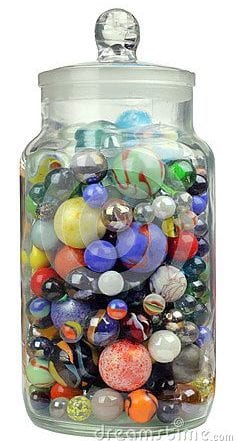
I’ve trusted people I shouldn’t have. I’ve opened my heart and been hurt. I’ve expected loyalty but got betrayal. At one time or another, haven’t we all? Trusting someone requires vulnerability. What I’ve learned, the hard way, is that you can’t allow yourself to be vulnerable with just anyone. People have to earn your trust. I used to just give it away- no prerequisites. My mother (I think I’ve mentioned) used to call me Tinker Bell. And it was mostly because of this- I was too trusting. I couldn’t fathom that someone would deliberately hurt me: repeat a secret I’d shared or make fun of me in a group. I was wrong. Brene Brown, a research professor, writes about trust and vulnerability in her book, Daring Greatly. She says that vulnerability is full of uncertainty, risk and emotional exposure. It is based on mutuality and requires boundaries and trust. Vulnerability is the core, the heart, the center of meaningful human experience. It is the birthplace of love, belonging, joy, courage, empathy and creativity. In my defense, understanding that vulnerability was the road map to those gifts was the reason I opened myself up again and again. But I didn’t know about the Marble Jar. When Brene Brown’s third grader came home from school devastated because a girl in her class revealed her embarrassing secret to her entire peer group, Brene’ struggled with how to best teach her daughter about trust and connection. She didn’t want her daughter to operate out of fear and become disconnected in an attempt to stay “safe”. Even though it makes sense that after a betrayal someone might disengage and stop trusting, it is heartbreaking to imagine that outcome because one of life’s greatest joys is connection. Her daughter’s teacher kept a clear glass jar on her desk, and whenever the class did something positive she put marbles in the jar. Whenever the class did something negative, she took marbles out. That day, the class was so unruly she took marbles out of the jar. Brene told her daughter to think of her friendships as marble jars. “Whenever someone supports you, or is kind to you, or sticks up for you, or honors what you share with them as private, you put marbles in the jar. When people are mean, or disrespectful, or share your secrets, marbles come out.” I’d say this marble jar idea holds up in any relationship: parent, child, sibling, friend, lover, spouse, co-worker. I love the Marble Jar metaphor. It is a concrete reminder, one that is useful for someone who is 8 and someone who is 48, that trust is built one marble at a time.

Feminism and the Age of Aquarius

March 31, 2015

Feminism and the Age of Aquarius

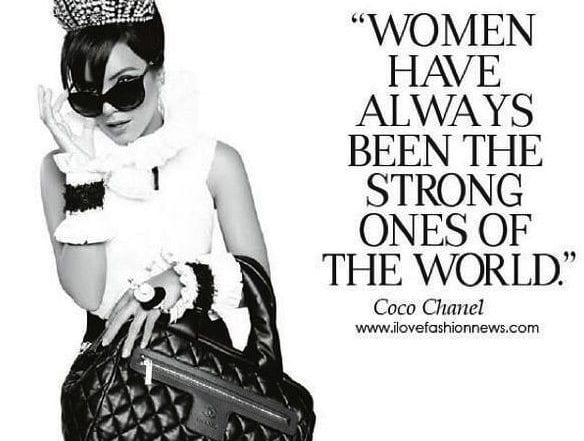
“Women are in nearly every way that really matters, superior to men and, moreover, that this superiority is finally becoming evident in our societies.” “In addition to women’s superiority in judgment, their trustworthiness, reliability, fairness, working and playing well with others, lower levels of prejudice, bigotry and violence make them biologically superior.” “Men are responsible for much more than their share of the world’s wars, drug abuse and sexual misbehavior.” The above statements appeared in The Wall Street Journal over the weekend. They are the words of Dr. Konner, a professor of anthropology at Emory University and author of, Women After All. I’ve been collecting data on this topic, doing research, for months. Pay attention. You’ll see it everywhere. FEMINISM. Feminism is having a revival. With a twist. The feminism I remember from my childhood (the I Am Women Hear Me Roar era) had an angry tone. People, including women, turned away from feminism because it seemed acrimonious, and so even if women agreed with its message often they didn’t want to associate or align with the movement. The feminism of today is less brash. It is more inclusive and balanced. Roxanne Gay, author of Bad Feminist, addresses this issue in her book. She writes about how a woman might’ve rejected feminism, believing she wasn’t a feminist, simply because she enjoyed reading Vogue. Today, feminism is taking on a different quality. In Wonder Women, Debora Spar, challenges how women were told they could be equal to men and have it all. “I can bring home the bacon, fry it up in the pan, and never let you forget you’re a man.” That perspective, or myth, left women overwhelmed, struggling to balance a career and family. In our culture, an attitude of be careful what you wish for emerged as the women’s movement was blamed for women’s problems. So here’s what’s new: Feminism is now asking men to step up and be part of the change. Sheryl Sanberg, chief operating officer of Facebook, and the author of Lean In, says that men may fear that as women do better they will do worse. But the truth is that equality is good for men too. At Elizabeth Irwin High School in New York City there is a course in Feminism. The boys in the class made a video, clips of each of them stating, I am a feminist. Every year at Omega Institute there is a Women and Power Conference. 2014 was the first year that men were invited to be a part of the conversation. Elizabeth Lesser’s speech was extraordinary and I encourage you to click on the link and read what she has to say about women and men and power and change. In her speech, (which remember was a lecture on women and power) she talks about her stepson, and how he is consciously choosing to be a full-on parent. She told her stepson that the way he was being a father was changing the world at its core. I see my own sons talking to their children and I know something is shifting. In a world that has “denied women of their smarts and men of their hearts” my two and a half year old grandson cannot only distinguish one emotion from another; he can verbalize his feelings too. “I’m angry at you, Dad.” “Why?” his father asked. “Well, I’m not angry at you. I’m angry because we’re not leaving.” He’d had his coat on and was waiting for his father for some time. He was frustrated and tried to express that. In my day, and in generations before mine, a young boy would not have been allowed to talk to his father in this manner. A boy’s frustration and anger might've shown up in a less than productive way, possibly even a violent way. We are in a transition. I can feel it. I think its because we are entering the Age of Aquarius. I first heard about the Age of Aquarius in the late sixties. As a child, I sang to the 5th Dimension on a record player. I didn’t know then that the Age of Aquarius was a real astrological age. But a few years ago, I learned about the Age of Aquarius while attending a lecture at the 92nd Street Y. What I learned was that an astrological age lasts approximately 2,500 years and that the change into this age has begun. According to the lyrics of the song, the Age of Aquarius will occur… When the moon is in the Seventh House and Jupiter aligns with Mars Then peace will guide the planets and love will steer the stars Harmony and understanding Sympathy and trust abounding… These are the values (love, brotherhood, peace, empathy) we need to focus on, knit into our consciousness. These principles, historically, have been associated with woman, and were thought of as weak or too vulnerable. But no longer. If this is where we are headed, women must take leadership roles. And men must support them. Let the sun shine in.

Friendship Matters

March 17, 2015

Friendship Matters

Once I was in a gigantic slump and my friend, Susan, came to my house to comfort me. We laugh now, looking back, that my child’s Magic 8 Ball was the only solution she could offer. I held the ball in my hands, hopeful. Q: Will everything work out? A: Hazy, try again later. “Well, do it again,” Susan said. “Don’t give up.” Q: Will this misery pass? A: Don’t count on it. Q: No, I mean will it eventually pass? A: Very doubtful. But Susan held strong. “Shake it up. Try again.” Susan is not Kim. Kim is a psychotherapist, and other best friend. Kim believes in talk-therapy. She would’ve listened, less solution focused. Empathetic, she would’ve had tears in her eyes too, and begged for a turn with the 8- Ball. Susan is not Pam. Pam would’ve wanted to get my mind off things. She would’ve wanted me to stay busy. She would’ve suggested a trip into Manhattan, a couple of drinks, shopping. I shook the ball again and prayed for a proper outcome. Q: Will I feel better soon? A: Cannot predict now. Susan sat next to me as I overturned the ball again and again until... Q: Will I feel better? A: Most likely. My friendships are dear to me. Essential. And so I was disheartened to read that friendships are fading. In a Harvard Medical School study, researchers found that not having close friends leads to increased stress hormones and blood pressure; and it could be as detrimental to your health as smoking. Not having close friends leads to feelings of isolation, depression and emptiness. So it is a shame that we don’t always have the time to nurture these relationships. Or we don’t make the time. (See this article from The New York Times: What My Friends Mean to Me.) My friends tease me that when they call, I treat them like telemarketers, which of course, I think is totally untrue. And this is because of what is true, which is that they mean the world to me. These are friendships that go back decades and whether we are being as adventurous as Thelma and Louise or as kooky as Lucy and Ethel, we have been there for each other through all of life’s challenges: problems with our kids, marital discord, divorce, bouts of cancer, financial issues, and even losing a spouse. These are things the Magic 8 Ball can’t fix. But a friend sitting next to you on your couch, as you cry, a Magic 8 Ball in your hands, while you make up outrageous questions to ask it—loony enough to make you laugh—even when it was the last thing you could imagine doing. That could fix things. Q: Will these friendships last forever? A: It is certain. “Piglet sidled up to Pooh from behind. “Pooh?” he whispered. “Yes, Piglet?” “Nothing,” said Piglet, taking Pooh’s hand. “I just wanted to be sure of you.” -A.A. Milne, Winnie-the-Pooh