Skip to content

Blog

Journal Archive

Essays, stories, and updates from Corie Adjmi.

Should Your 20-Somethings Live at Home?

August 25, 2015

Should Your 20-Somethings Live at Home?

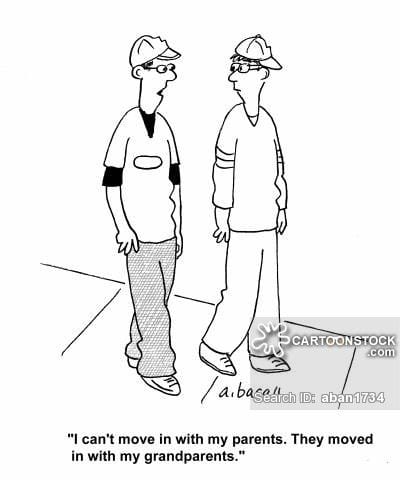
My two 20-something year-old children moved back home this year after living on their own for a while. I liked the idea of them moving back in— even as I watched band equipment pile up and block the front door. It was like a second chance, a chance to know my children as adults, and to parent them as adults too, which is a whole different story than parenting them as children. And quite frankly, I missed them. When adult children return home, after living independently, some things remain unchanged like the fact that their Harry Potter collection still rests on their bedroom shelves, but they no longer need me to cut fresh fruit for their breakfast lest they miss a healthy start to their day. It’s common now for 20-somethings to live at home. They are what are known as the Boomerang Generation and close to 40% of millennials live with their parents. There has been some worry over this: Are these adult children unable or unwilling to live on their own? Parents, including myself, have an uneasy feeling. Are we enabling unhealthy or, at the very least, unsettling behavior? Shouldn’t they be paying their own bills, doing their own laundry, cooking their own meals? At first, when my adult children moved back home, I wondered if I was making a mistake, overindulging them. They are 16 months apart and when they were small, I used to sit them side-by-side, like twins, under a breakfast tray in my bed, and serve them cheese and croissants and orange juice while they watched television. I was giving them breakfast in bed before they were three. Of course they’d want to come home. Who wouldn’t? I wondered if allowing them to come back was wrong—a setback, a crutch. After all, when I was a 20-something, I already had a husband, 2 children and a house. But things are not the same as they were when I was a 20-something and lately I’ve been thinking about this cultural shift in a different way, mostly because my 20-somethings seem to be doing just fine. It’s important we consider what’s changed. For one, people are living longer. Women are not pressured to marry and start a family as early as they once were. (I know a woman who had twins at 47!) And economically, this generation can’t compete. It is arrogant, and I believe a bit naïve, for any generation to look at the one after it and judge, or to think we did it better. My generation can look at 20-somethings and criticize their “delayed” development or we can scrutinize what’s happening in our culture from a different point of view, a positive one. Historically, in this country, 18 year-olds went off to college, and many of them never returned home. Sometimes that was due to job opportunities in far-off cities but often people deliberately moved across the country to get as far away from their parents and family strife as possible. Consequently, we have seen epic numbers of depressed people, lonely and isolated. But the 20-somethings I know have been parented with more emotional attunement. And, in my opinion, that’s not a bad thing. In fact, it seems that psychologists are beginning to understand the importance of Bowlby’s Attachment Theory, and its ramifications at all stages of development. Bowlby’s ideas are being considered not only in how young children attach (and separate) but in marriage as well. Dr. Sue Johnson, the author of Hold Me Tight, says that we are emotionally attached to and dependent on our partners in much the same way that a child is on a parent for nurturing, soothing and protection. I’m suggesting that 20-somethings need that support and comfort as well. There was a time when multigenerational living was the norm. But then things shifted as people needed to work outside the home: going off and becoming independent became a necessity, and then a goal. So while healthy separation and becoming independent may be important skills to master, is it possible that we drive that agenda unnaturally, or at least prematurely, by expecting two year-olds to spend all day at school and 18 year-olds to live on their own? There’s been a backlash and not just in families. Today schools and work environments are responding as people cluster at communal tables and shared workspaces. We are social beings and we need one another. When our emotional connections are disrupted, at any age, it can be unsettling. Traditionally, as children moved away from home, parents had to deal with the sadness associated with empty nest syndrome. So maybe it’s not necessary to push our chicks out of the nest so soon. It is true that your 20-something may leave his or her shoes on the kitchen floor but then you may find your freezer stocked with your favorite organic vegan cookies. Your razor may go missing but then your 20-something comes home and wants to talk, hang out, just as you were feeling lonely. Why not let them stick around awhile? My 20-somethings are beginning to spread their wings. And when they feel ready, I know they will fly.

How To Overcome Resting Bitch Face

August 11, 2015

How To Overcome Resting Bitch Face

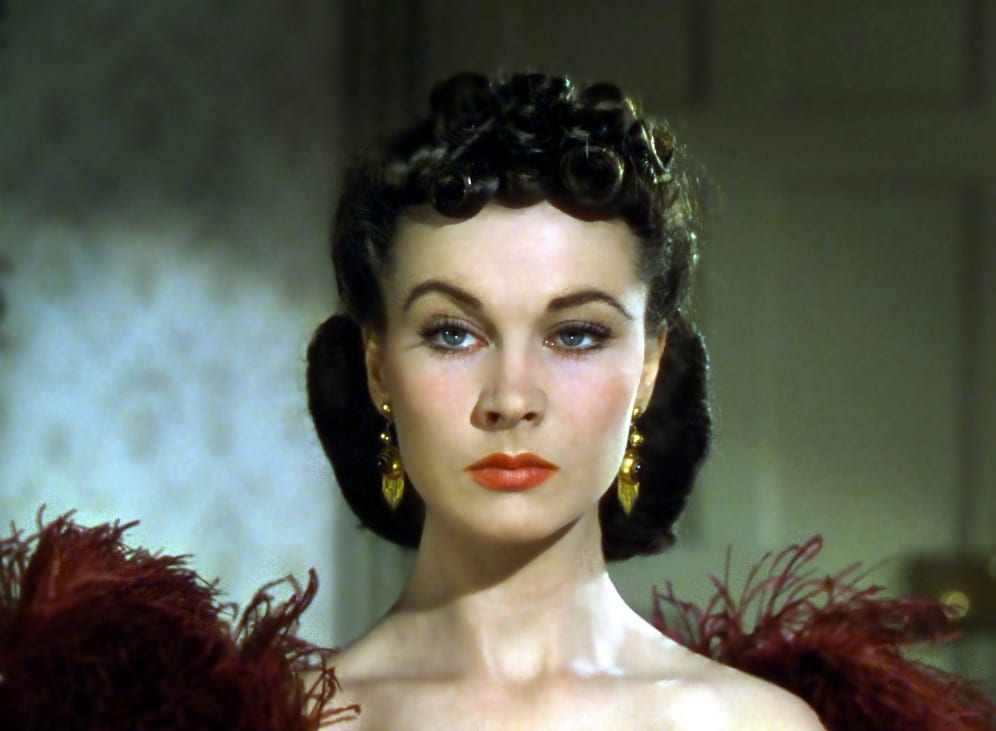
The year I turned thirty my friend said, “You know, you move your face a lot when you talk. You should be more careful.” “What?” I asked, my forehead scrunched. “You’re going to have to live with that skin for the rest of your life,” my friend warned. Of course what she’d said was not news to me but it was jarring. What was I supposed to do? Talk without expression? No joy? No wonder? In all honesty, I didn’t give what she said much thought until not too long after, I looked in the rear view mirror of my car and saw (with horror) a vertical line (my first) beginning to form in between my eyes. It was a significant moment, if not traumatic, my youth fleeting. I started to pay attention. For a while I got caught up, buying into the idea that aging was bad, something to be avoided or slowed. But when I noticed lines around my mouth, something shifted. Maybe I’m crazy, but I like those lines. They’re called smile lines for a reason. Why would I want to erase them? This revelation was empowering. And that’s why the New York Times article, "Cursed With A Death Stare", aggravated me. This brand of journalism creates an unrealistic, unhealthy view and perpetuates a ridiculous notion: that we have endless reasons to be ashamed of how we look. I'd never heard of the term “Resting Bitch Face” or RBF until I read the New York Times piece and its condescending, anti-women agenda was enough to make me scowl. And just to be clear, I’m not blaming men. Women do it to themselves. In the article, Anna Paquin, 33, defined RBF (a woman’s face at rest—no smile) as looking like you want to kill someone. There are photos of celebrities (Kristen Stewart, 25, January Jones, 37 and Victoria Beckham, 41) who are accused of RBF. In my opinion, these women are beautiful. In arbitrarily labeling the look pejoratively (angry, irritated) we establish truth from a lie. Resting Bitch Face is a result of genetics, gravity and aging. There is madness in creating standards around age and beauty that are impossible to meet, expectations that leave us feeling bad about ourselves. In the article, Anna Kendrick, age 31, actually wonders, “What’s wrong with me?” And how’s this for insanity— If I smile, I get smile lines. If I don’t smile, I get accused of having an angry bitch face. One female doctor, an educated 51 year old women who did not have a line anywhere on her plumped up face, educated me about how as women grew older the corners of their mouths curled downward. I’d never noticed that before. She suggested that I become more aware and that I give a little (continuous) smirk to raise the corners of my mouth a bit. Was she kidding? She wasn’t. What she suggested sounded exhausting, unrealistic and overly self-focused. But this summer, at a party, it happened to me for the first time. Someone asked me what was wrong. “Nothing,” I said. “You look angry.” I guess what he saw was my “resting bitch face”, which we should rename “resting thinking face” because that’s what I was doing. And what actually makes my brows furrow is the idea that I have to concentrate on looking perky while I’m supposed to be resting.

When to Clean House

August 4, 2015

When to Clean House

My husband sent me this picture at 7:40am. The text below said, “Now what!!” I was in New York City. He was at home in New Jersey. I laughed hard. I laughed not only because of his predicament but also because I admired his humor considering the jam he was in. My husband is bossy and controlling but he’s not high maintenance. And since I am usually the first to criticize him, I wanted to stop here and say I appreciate his easy-going nature about household things. Recently, every one of his golf shirts went missing. He barely said a word and bought new ones. When he had only one pair of underwear left in his drawer, he simply said, “Last pair.” And after a shower, there were no bath towels in the cabinet. I honestly don’t know what he did. (There were plenty of hand towels.) I spent three days in New York City and he kept sending me texts and pictures, updating me on the status at home. Random garbage. A family group text goes out: Who did this? By the time I got back to New Jersey, let’s just say there was an outdoor garbage can that had not been emptied since the weekend. Inside the can there was a rotting strawberry Pop Tart, some half-eaten Oreos and a handful of sticky Laffy Taffy wrappers. You can imagine the rest. All of these calamities weighed on me but I hate housework. Thankfully, I have help (new and inexperienced) but still, I don’t supervise well. We are a big family and it’s hard to keep up. My mother always said, “Housework is the most thankless job. You clean a sink only for it to get dirty again.” It seems like everyone else around me gets it though. At other houses bath towels are folded all the same way and stacked properly on shelves. Coffee is delivered to bedroom doors every morning. That’s certainly not how things work at my house and I often think I’m doing something wrong. The problem is I don’t want to focus on doing it right. It's summertime and I want to write and read and ride my bike. In order not to make myself crazy, I teeter-totter between caring and not caring, cleaning and not cleaning. I take a break from writing and go to the kitchen. It’s noon and this is what I see. Breakfast dishes I also see two of my children, my daughter-in-law and my grandson at the dinette table, talking. I have choices. I reach for my cell phone. I take a deep breath and the picture above. I decide to write about this and think— One day I’ll get it right. And then again— maybe I won’t.

From The Core- One Year Anniversary!

July 28, 2015

From The Core- One Year Anniversary!

It’s been a year! My first From The Core post appeared July 28, 2014. I was scared and unsure: Would people like what I wrote and how I wrote it? Was I ready for the world of social media? What if I made a grammatical mistake? Well, I did make errors. Some I was able to fix, others I wasn’t. And remarkably, I survived. Reader comments kept me going. Some of you responded directly on the blog site, some on Facebook, some on Instagram, some by private text message and many in person: at the grocery store, at parties and on the street. (You’d be surprised how many people are hesitant to comment through social media. I was happy to learn, I wasn’t the only inhibited one.) Tuesdays became my favorite day of the week as I woke to other bloggers liking my post and tracking how many people had read. I heard from people I hadn’t talked to in 20 years, from people all over the country and yes, even an old boyfriend. My work was read in Australia, Canada, Mexico, Italy, Spain, France, Norway, Germany, the United Kingdom, Portugal, Israel, Lebanon, Nigeria, Saudi Arabia and more. A special thanks goes to my friends and family who let me write about them, their outrageous stories and vulnerable moments. All year, friends teased that they had to watch what they said in front of me for fear they’d end up in a post. I heard everything from, “Shhh, she’s going to write about you” to “It’s good Corie’s not here.” (Yes, people repeat these things to me.) Looking for material or attempting to drum up good conversation, this blog has been the impetus for many a dinner table debate. Over the course of this year, I wrote about topics that mattered to me. Equal rights- Gay Marriage Empathy- Still Alice Marriage- Why Are So Many Marriage Essays Going Viral? Parenting- Parenting Gone Well Friendship- Friendship Matters Sex- Masters of Sex Education- Doodle Power Addiction- Monkey See, Monkey Do Writing- Writing: It Could Come Back to Bite You. The Environment- Earth Day 2015. I wrote about topics that peturbed me slightly- Pouting Face Emoji And things that annoyed me greatly- A Tip for My Uber Driver. I wrote about what I found comical- Braces: The New Chastity Belt and Are You A Control Freak Parent? And things I feared- Fear: The Good The Bad and The Ugly. Writing about these topics made me focus on them, and in writing Gone Girl No More, I faced my apprehension, put myself out there, and finally got headshots! Daring greatly (I'm a Brene Brown lover) I'm posting them here. Help me choose the new From The Core photograph so I can get rid of the blurry one on my About Page. HEADSHOT #1 HEADSHOT #2 Tomorrow is the anniversary of the night my husband asked me to marry him so this is kind of a double anniversary for me. And it’s appropriate that my blog about relationships and my marriage share an anniversary because as long as I’m married to my husband, I’ll always have plenty to write about! P.S. Thanks for reading!! And don’t forget to pick a headshot favorite!!

Traveling With Friends

July 21, 2015

Traveling With Friends

We play the Newlywed Game even though we are the opposite. We are four couples– all married close to three decades. We travel Italy on a boat. Close quarters. From the moment we step onboard, until the moment we get off eight days later, we are together—morning, noon and night. We take turns, three years in a row, getting the Master Bedroom. This year was my turn. For a week straight, we don’t wear shoes. Boat rules. We dance on deck to Marvin Gaye. We laugh at shrewd one-liners. Everything we eat is delicious: arugula, pasta pomodoro, figs. All different than in the United States. One bright morning, Italian men in row boats paddle us inside the Blue Grotto singing, “Volare oh ohhhh, Cantaree, oh oh ohhh.” The light through the cave, glorious. We swim–the sea electric blue. We know each other: The Control Freak, The Picky Eater, The Electronic Genius, The Bloody Mary Lover. We share everything. We negotiate and compromise. For this week, we are married to each other. Late one night, we journey from Ponza to Sardinia, a 16 hour, overnight expedition. We sit at the bow and stare at the stars looking for: Orion’s Belt, The Milky Way, The Big Dipper. I am uneasy because we are alone in the middle of the sea, no land in sight. I think about explorers, the bravery. No electricity, no radar, no knowledge of what lay ahead. The night wind blows, the sea waves break against the boat. Around us, darkness—the only light from the stars above— and the Shabbat candles, four sets, burning bright in the main cabin.

Our Old Ways Don't Hold Water

July 14, 2015

Our Old Ways Don't Hold Water

There was an emergency in my apartment building the other day and the water was shut off. Some New Yorkers mind the rodents, some— the noise. I mind when my water is shut off. (Not that I’m fond of rodents or noise. See: On Writing and Distractions.) But having water taken away gives me anxiety. I think about all I can’t do: cook, laundry, shower. But mostly, it forces me to think about people in other countries who can’t turn a faucet to get water and have to walk for miles. It makes me pay attention to how much we depend on it and expect it to just flow freely, clean and clear, through the tap. It was disconcerting when, hours later, the water was turned back on in my building and chunks of mud came out of the showerhead. When I attempted to brush my teeth, the water ran brown, then blue. What does that even mean? This got me conjuring up wild scenarios in my head, a world without water, a science fiction thriller. The next morning, I read an article in the New York Times, California’s Drought Changes Habits in the Kitchen. The article addressed how the drought is causing food shortages, higher prices and smaller crops. Lawmakers and citizens alike are making changes in order to conserve water. A new state rule prohibits waiters from serving water without a customer asking for it first. There is a $500.00 fine for breaking this regulation. Cooks are using the water they used to boil pasta to water their plants. They are baking and steaming vegetables instead of boiling them. The article resonated. It simply never occurred to me that I could, or should, reuse the water I boiled pasta in. But now that I’ve heard this idea, why wouldn’t I? I’ve written about our relationship to the earth before in Gratitude+Giving=Grace and Earth Day 2015. And again, it's possible that no single small initiative by any individual is going to save the world or be overly important. But what seems essential is consciousness and a sense of responsibility. Think about it: We take water for granted. Like it’s always going to be there. But what if it’s not? This past weekend, I walked on the Asbury Park Boardwalk. As I left the boardwalk, I walked along a path around a lake where people jog and bike and walk to the main street. On the path, there was a five-gallon water bottle and cooler. Beside the cooler, on a chair, there were stacks of plastic cups and a garbage can where people could dispose of their used cups. Clearly this was not an environmentally sound setup but this is where we are now. The Age of the Water Bottle and it stood out like a mirage in the desert. Perched on top of the water bottle, was a sign, and on it was a Jewish prayer known as Shehakol. It is a blessing said before drinking water. So there I was tired, hot and thirsty and there was this offering, this water for me and everyone else who passed by. All the homeowner wanted in return was for those who drank the water to stop for a moment and express gratitude. There was something in the generosity, the thoughtfulness, coupled with my thirst that made that moment have deep meaning and as I recited the prayer, I felt sincere appreciation. Simultaneously, I felt a bit of anxiety as I stopped to reflect on how when I was a child, water was complimentary. I could drink from the tap without thought and play for hours, carefree, with a garden hose; and how presently we pay for water that we drink out of plastic bottles, how we pollute our drinking water and how environmental issues like droughts are making water scarce in our own country. The five-gallon water bottle is a symbol of where we are now. The question is: Where are we going?

Let's Talk About Sex

July 7, 2015

Let's Talk About Sex

I was never one to talk about my sex life. I thought discussing sex was distasteful. Where did I get that notion? According to the New York Times article, Let’s Talk About Your Sex, I’m not alone. Even couples therapists don’t talk about sex. Or at least, they didn’t until recently. And shockingly, couples therapists aren’t required to have any training in sex. But there are provocative voices emerging in the field of couples therapy and the questions these therapists are asking and the ideas they are probing are gaining my attention. A few months back, in a blog post titled, Your Brain and Love, I recommended Stan Tatkin’s book, Wired for Love. The premise of the book is that if you understand your partner's brain and attachment style, you can defuse conflict and build a secure relationship. I am now reading Hold Me Tight, by Sue Johnson. She is the developer of Emotionally Focused Therapy and believes we are emotionally attached to and dependent on our partners in much the same way that a child is on a parent for nurturing, soothing and protection. Both books emphasize safety, loyalty and attachment as the foundations for intimacy. But the New York Times article also mentions therapist, Ester Perel, who I wrote about in a blog post called, Desire and Marriage: A Pardox? She believes that the current conversation around intimacy and sex are limiting, that while an affair can be an act of betrayal it can also be about expansion and growth. Dr. Nelson, the author of The New Monogamy: Redefining Your Relationship After Infidelity, is also noted. Both Ester Perel and Dr. Nelson believe that a marriage is not over after an affair. They are broadening the conversation, not speaking in absolutes, asking important questions. They are curious, studying. In regards to an affair, Ester Perel speaks about being an investigator as opposed to a detective. A detective wants to know where and when and with who. An investigator wants to get to the meaning of the affair. The New York Times article attempts to position Sue Johnson against Perel and Nelson and I’m wondering why we feel the need to turn their ideas into opposing ones, a battle of it’s either this or that. Why can’t we look at their ideas as this and that? All of the therapists mentioned above are adding to the conversation about what it means to partner with someone you love. They are changing the dialogue, challenging old rules and supporting new ways of being in relationship. Some of their beliefs (like how an affair can draw a couple out of deadness or that your couple bubble comes first, even before your own children) can feel frightening or downright outrageous. But they are talking, stretching our beliefs, and I admire that. Not too long ago sex wasn’t taught in school. People feared that talking about sexuality would encourage kids to have sex prematurely. But some were having sex anyway so why not educate them, give them information that could prevent them from contracting a disease or getting pregnant. Dr. Nelson trains therapists to ask a couple about sex in the first session. “If you’re not talking about sex, you’re perpetuating the idea that they shouldn’t be.” So in an effort to move out of darkness and into possibility, I agree, Let’s talk about sex.

Gay Marriage

June 30, 2015

Gay Marriage

“Who’s happy?” one of my friends said over drinks this past weekend in regards to marriage. He wasn’t being facetious. He was really asking. Okay maybe he was being a bit tongue-in- cheek since he is actually happily married. But as I looked around at my group of friends, I saw something I’d never really seen before: A friend who was divorced and with her new husband. A friend who was there alone because she was in a fight with her spouse. A friend in the middle of a divorce. A friend who is widowed. And one married couple. That same day the New York Times reported: 5-4 Ruling Makes Same-Sex Marriage a Right Nationwide. So of course, this historic news came up in conversation with my friends. “It will be the new normal,” one of my friends said, a bit concerned or at least unsure. “It’s all the children of today will know.” “That’s okay,” another friend responded. “Fifty years ago Blacks and whites didn’t share the same public restrooms and then that became the new normal.” How was that reality even possible? I guess it’s a good thing that situation feels antiquated and, more to the point, it is evidence that in time we'll look back and wonder how we could've denied marriage rights to any particular group. I must admit I stared for a long while at the twelve photos of the same-sex couples on the cover of the newspaper, wanting to know their stories, imagining their lives— what it was like for them before this vote and what life would be like for them now. I took a hard look at these people, happy for them, feeling celebratory that they’d accomplished this goal—to be together, openly and legally. And now they had what we had. Marriage. And yet here we were a handful of mostly married people: all living our own individual lives, all making different choices, at different turning points. What did we all have in common? Choice. Maybe the divorced friend would remarry, maybe not. Maybe the married couple would stay together, maybe not. I recently read that the word gay has become so prevalent in meaning homosexual that people hesitate to use the term in its original sense to mean happy or joyful. I’d like to use the word in its original meaning here. If it’s what you choose—Gay Marriage for all.

What My Father Gave Me

June 23, 2015

What My Father Gave Me

Well, I did it again. Here I am posting a Father’s Day post two days after Father’s Day just as I posted my Mother’s Day post two days after Mother’s Day. And that’s a good thing this time because (and I mean this in a loving way) my parents are competitive. If I talk to one longer than the other on the phone, the one who gets less phone time feels slighted. If my sister’s call reaches them first on a birthday, I know about it. It’s all done in good fun. A kind of game. With my dad, everything is a game. Throughout my childhood, he played with my brother and me: pillow fights, Marco Polo, football. He made long car rides fun because like a game show host, he’d ask us questions, and keep score, “How do you spell BOULEVARD?” “What were the names of the ships Columbus sailed to America on?” He didn’t play board games like Monopoly or Life. No, he played Hide and Go Seek and Cops and Robbers: anything that got our adrenalin going. He took me to Pontchartrain Beach and we rode on the Zephyr. He took me on a helicopter, a motorcycle and to a shooting range. (I blame my father completely for my marriage to the kind of man who would take me hiking, without a guide, into backcountry Canada, where we were face- to- face with a grizzly bear.) How does that happen? Okay, that’s a different blog post. Back to my father. When I was 4, my father took me to buy a pumpkin for Halloween. I chose a perfectly formed bright orange one. My father picked up a misshapen one and said, “What about this one? Nobody else is going to take this one home.” And so we did. I’d like to think that was a lesson learned, that showing sensitivity to a pumpkin shaped me somehow, the beginning of empathy. Like many children, I was afraid at bedtime. Often, my father would snuggle with me in bed and tell me stories, the most dramatic, far-out stories imaginable. That’s how he soothed me. Stories. And that’s how I soothe myself today. Stories are an essential part of my life, listening to them and telling them and writing them. They are my entertainment and my savior. My dad is also the number one best back scratcher on the planet! My mom—not so much. She cups her hand on my back and keeps opening and closing it in the same spot until it feels like her fingers are going to draw blood. Dad— That’s a way you’ve got mom beat—by a long shot!

June 16, 2015

Why Do Men Get Manicures?

My father bought his first purse in 1979 when I was a high school student in a college preparatory school in Louisiana. Suffice it to say, other fathers wore plaid and button-down Lacoste shirts. Not black leather. It was completely embarrassing. But now, as an adult, I see things differently: a purse (or shoulder bag as my father likes to call it) is practical. It may not be my preferred aesthetic but I also think it’s none of my business. Maybe my thinking is skewed because I know, and adore, some men who get manicures (buff, no color), who arrange flowers and who cook: once for women only. The term metrosexual was coined in 1994 describing a man who is meticulous about his grooming and appearance. The word comforted straight men, classifying them, so they wouldn’t be judged pejoratively for doing traditionally feminine tasks. It was revolutionary that you could be a straight male and like things that women liked. But why all the labels? Can’t we just like what we like? Which of course brings me to Caitlyn Jenner. And all I have to say about her situation is… I don’t care! Let me correct myself. I care a lot that she has the right to be whoever she wants to be. I care a lot that she can look however she wants to look. When I say I don’t care, what I really mean is, it’s none of my business what Caitlyn does or what she wears. Who am I to judge or decide how someone else should live? Or how they should look. We are always classifying things, trying to come up with solid answers about how things should be. Maybe things aren’t so clear-cut. And maybe they don’t have to be. The fact is there are men who have long hair, get manicures and carry a shoulder bag. There are men who are emotional and prefer a flower show to a boxing match. Why should we care? I’ve pondered the difference (or lack of difference) between men and women before. But this topic has taken on new momentum with the hype around Caitlyn Jenner. Feminists are infuriated by the publicity around Caitlyn’s display in Vanity Fair, and criticize her for flaunting herself in the image of a male fantasy. Some believe she has undermined the feminist movement. We live in America, the land of the free and home of the brave, and whether gender is determined by our brains being wired differently, anatomical, biological, emotional, aesthetic or spiritual differences, again, feels like none of my business. Why do men get manicures, arrange flowers or dance ballet? Maybe it’s because while men may be from Mars and women may be from Venus, people are from Earth.