Skip to content

Blog

Journal Archive

Essays, stories, and updates from Corie Adjmi.

Killer Heels

December 9, 2014

Killer Heels

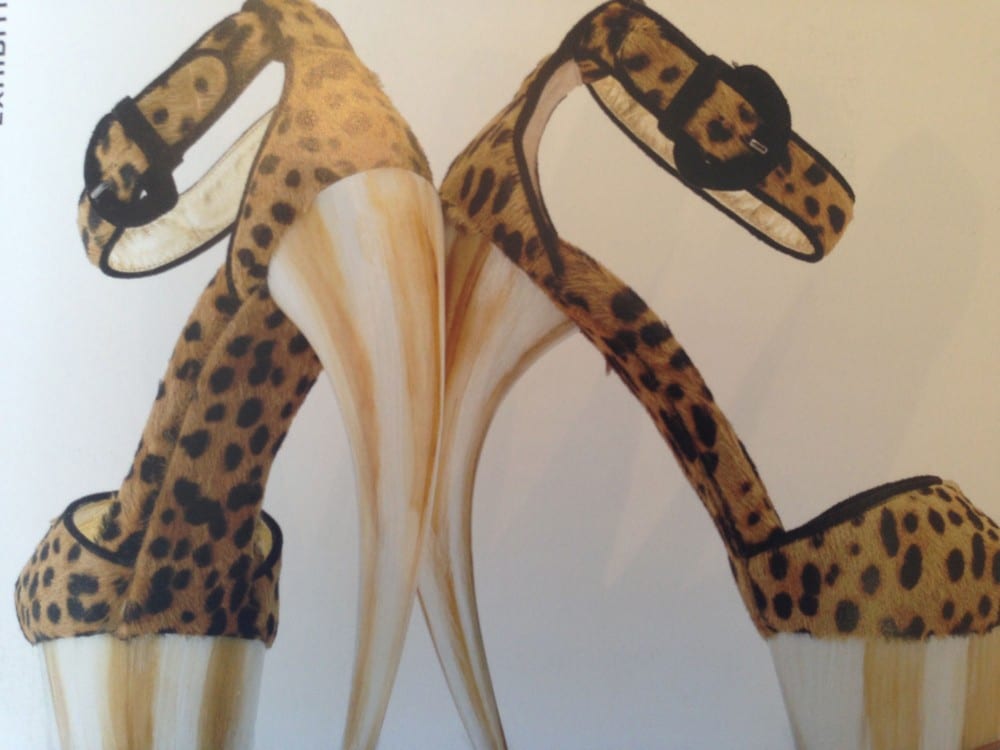
Is it true that men are chumps for women in pumps? A new study out of France says that men are more helpful to women in high heels. Is that why we wear them? The first time I can remember being wowed by a pair of heels was when Olivia Newton John wore red stilettos in the movie Grease. Her beauty mesmerized me, even as she danced, a bit wobbly, as if dancing on stilts, singing You Better Shape Up to John Travolta. Given how good she looked to me, her discomfort and clumsiness seemed irrelevant. I bought my first pair of heels, red Candies, just a few months later. I was 14. And I loved those shoes. Some historical accounts show that heels were worn by men, and not women, as early as the 9th century in Persia. Other accounts say heels grew in popularity around the time of Louis XIV in France. High heels were symbols of power and dominance, allowing men to tower over other men. Heels were initially associated with class, status and privilege. Around the 17th century upper class women began to wear heels and by the 18th century, men stopped wearing them, deeming them impractical. Heels went out of fashion for a while but then made a comeback in pornography, mostly pinups for men’s barracks during World War ll. It wasn’t until after the war that the stiletto was invented and fashion aligned with erotica. While we may have had a desire for higher heels; we simply didn’t have the technology. But in the 50’s it became possible to create higher heels by putting steel in the heel, and crafting high heel shoes became an art form for striking and innovative design. Presently, at the Brooklyn Museum, there is an exhibit, Killer Heels: The Art of the High Heeled Shoe. I loved the exhibit, and viewed the shoes on display in awe, appreciating the genius and beauty in the designs, captivated by the red soles on countless Louboutin shoes, gold leather Salvatore Ferragamo wedges from 1938 and silk creations from as far back as 1650. But then there were the shoes from China that women who had their feet bound wore; and my heart literally clenched, my stomach turned. I went home and read about foot binding and how a woman’s foot was broken and bound in order for it not to grow. As a result feet would be smaller, more dainty and womanlike. This process, foot binding, was excruciating, feet deformed and women crippled. And yet the desire to be beautiful, and maintain high status, according to some cultural belief, allowed this to go on for centuries. Is it so different today here in America? Our back hurts, our calves are tight but go to Barney’s 5th floor any time of any day. Go to the Bergdorf’s shoe salon. Those floors are so crowded you would think they were giving the shoes away. On the contrary, prices have climbed as shoe departments have grown in size. It seems we can’t get enough. Of course flats are displayed too; but that’s not what catches my attention. What fuels our desire for heels? Is it Carrie Bradshaw from Sex in the City? Does her desire for Manolo Blahniks glamorize the high heel? Are women more attractive in stilettos? Or have we been conditioned to think that high heels are beautiful because celebrities and fashion models are pictured in them? Here’s news: in 2010, at an Alexander McQueen fashion show a model took off her deadly sharp stilettos, protesting, choosing not to walk the show for health and safety reasons. Are high heels the new cigarettes? There was a time when Lauren Becall and Humphrey Bogart made smoking look cool. But in case you didn’t know, Humphrey Bogart died of esophageal cancer. As people got educated and became aware of the hazards of smoking, things changed. So feminists, like the surgeon general, warn us. They proclaim that heels are unsafe and detrimental to the well-being of a body, our backs and feet compromised. And maybe that agenda has been successful. The image of the heel altered from something beautiful to something irrational, which leads one to believe that flats are just cooler. Image accounts for a lot. And possibly, in time, these shifts in thinking will change things for future generations. Often, comfort wins out, and I wear flats; but while I believe there is nothing as uncool as wearing high wedges or heels to the beach or a poolside, sometimes, I do it anyway. Even though it might not be considered the height of elegance or class, I have been known to dance barefooted at the end of a long night. Yes, I can be defeated, or more precisely, “defeeted” by my shoes. And yet, I won’t stop wearing them. I gawk at them in wonder in magazines, on department stores shelves, on other women’s feet and in museum exhibitions. They are inexplicably alluring. In Kinky Boots, the Broadway show, there is a song called, Sex Is In The Heel. And maybe that’s it. After all, John Travolta responds as desired to Olivia Newton John as she struts in those red stilettos. He sings, “And I’m losing control ‘cause the power you’re supplying, its electrifying.” High heels are instruments of power. And I, along with many other women, buy into the idea that they elongate your legs, make you wiggle when you walk and give you a taller, thinner silhouette. Even though logically, I want to say those are silly, superficial reasons to wear high heels, on some primitive level, I’m seduced by them. Just as men are.

Sisters, A Spa and the Sea

December 2, 2014

Sisters, A Spa and the Sea

Wanting to spend time with my two daughters, I recently took them to Canyon Ranch in Miami. Even though they are 7 years apart, everywhere we went, people thought they were twins. They are becoming women. And I notice how they’ve grown. Elaine, 16 years old, speaks up, her voice determined. She knows how to ask for what she wants and get it. Rachel, 23, keeps reminding me she can take care of herself, which of course she can. I watch them. And wonder about who they are as individuals, and who they are as sisters. When I am around them I feel more my age. It’s striking. I stare at their young bodies. Firm. Often now, I can’t hear what they’re saying; and even when I can, I don’t always understand. They do a lot of explaining. They share things with each other that they wouldn’t share with me. I like that and I don’t. We do spa-like things. We weigh ourselves. We talk about food. We try out the sauna. We relax on the beach and read books. We laugh over little things like how Rachel fell asleep in the sun and tanned half her face. They go to a Rock Climbing class and take Advanced Boxing, while I write. They have each other. When they return, there are stories. There was an instructor. Adam. "He liked me," Elaine said. "The other guy liked me," Rachel added. "Okay," Elaine said. They both giggle. "No fair," Rachel said. "You’re guy was cuter." Later, they do a couples massage. They come back to the room in spa robes. There are more stories. Two boys asked them out in the elevator. “Every time I leave you two alone, you get picked up,” I say. And then I point out that they had an unfair advantage being naked under their spa robes. They aren’t inhibited. That night at dinner, they go braless. And then the next day, they are kids again frolicking in the ocean, splashing and shrieking when jellyfish swim by. I sit on my lounge chair and watch. Listen. We play a game. Name 3 characteristics that describe each of us. They say I’m unique, and as much as I’d like to believe this is a compliment, coming from them, it’s questionable. They make fun of everything I do; but then, unexpectedly, and miraculously, they’ll come for a hug or sit next to me and put their head on my shoulder. While sometimes, in my eyes, my daughters go from being my babies to young women in the world, for them, I think, I am always, simply their mother.

Gratititude + Giving = Grace

November 25, 2014

Gratititude + Giving = Grace

Cars honked behind me. The light was green but I wouldn’t budge. Richard, my 10 year-old son, sat in the passenger’s seat next to me. “Go, Mom.” “Did you just litter?” I asked Richard. “It was a tiny gum wrapper.” There was another honk. And then another. “Get it,” I said. “Get what?” “The wrapper. We don’t litter.” “Mom, go,” Richard said. The number of cars behind us grew and the honking got louder. Driving in Brooklyn is never easy. Congestion and road rage are common. “Pick it up, Richard,” I said, calmly. “Mom, it’s not a big deal. Just go.” Still, I wouldn’t drive. I guess Richard thought that retrieving his garbage was less embarrassing than having his mother cause major traffic and a scene because he got out of the car and picked up the wrapper. Back in the car, Richard went on to tell me how throwing that one piece of paper out the window made no difference to the world. And I told him how I couldn’t disagree more. Not littering is one way I show my respect and gratitude for the land we live on. It’s one way I give back. I learned about giving, in small ways, early on, when at school we had a can drive every Thanksgiving and wrapped presents for poor children every Christmas. At Halloween, I walked door-to-door, an orange coin box in my hands, and collected money for Unicef. Around Easter, I sang in the school choir in old age homes. Did those things not matter? It is my opinion that those things mattered a lot. They mattered not only to the people who were on the receiving end, but they mattered to me. Acts of kindness are good for the soul. With Thanksgiving just two days away, I set out to write about giving and gratitude and almost didn’t thinking I should be more original. But then I came to this- maybe some things don’t get old; like love and peace and yes- gratitude. Alicia Keys recently came out with a new song, We Are Here, which begets an important question, why are we here? Asking us to reflect on this stirs our sensibilities, and her intention was to start a movement. She has used her art as an impetus for people to come together and make a difference, make the lives of others better. “Never doubt that a small group of thoughtful, committed, citizens can change the world. Indeed, it is the only thing that ever has.” ― Margaret Mead Take the Ice Bucket Challenge for example. People cared and they responded. All over the world, people participated; and in just 3 weeks, ALS received 13.3 million dollars in donations and created enormous awareness. Some think the challenge was about narcissism more than altruism but I disagree. I think there is a light in us called goodness. And it was sparked. But we have to be careful because the light can just as easily be extinguished. In the opinion pages of The New York Times, Tim Kreider writes On Smushing Bugs and his description of what happens to people when they shut down, and forget to pay attention, seems relevant. “A bug may be a small, unimportant thing, but maybe killing or saving one isn’t. Every time I smush a bug I can feel myself smushing something else too-an impulse toward mercy, a little throb of remorse. Maybe it would feel better to decide that killing even a bug matters.” What I’m trying to say is that every little action, or inaction, is significant. And just as we can diminish an act, an act as small as killing a bug, we can commend its grandness not to. It’s about consciousness and conscience. It’s about compassion and respect. So let’s show our thanks, whether it’s for the land we live on, or our ability to give to others. Pick something, anything at all. Be creative. You will inspire and motivate others to do the same. You can make a difference.

Masters of Sex

November 18, 2014

Masters of Sex

We all know them. Those women who fake a migraine or stay in the bathroom long enough for their husbands to fall asleep. They are masters of sex all right, masters of getting out of it. But why? According to Denise A. Donnelly, an associate professor of sociology at Georgia State University, who studies sexless marriage, an estimated 15% of married couples haven’t had sex with their spouse in the last 6 months to one year. Isn’t that strange? We live in America, the land of the free, and of hot Hollywood sex. We are a sex-craved culture. So, what’s up? It seems that even singles are affected wanting less from partners, preferring to hookup rather than to build a relationship. But interestingly, hooking up is on the decline as singles choose virtual relationships, flirting via phone or computer with no intention of meeting one another. It’s true hearts are unreliable; but are humans going through a metamorphosis, evolving into beings that don’t need intimacy? Can we really protect ourselves from the fact that someone could stop loving us, leave us (emotionally or physically) or they could die? In the Showtime series Masters of Sex, and in actuality, Bill Masters and Virginia Johnson pioneer studies in human sexuality, devoting their lives to sex research. But their real life story feels like a cautionary tale. Virginia Johnson gave up her dream of getting an education to work with Masters. She submitted to a sexual relationship with him as part of her job; and ultimately, she married him. Only to be left years later when he fell in love with someone he knew from his youth. The lesson to be learned seems evident: You can’t be left if you leave first, or if you abstain, and never show up in the first place. Sure it’s scary to connect deeply with another person; but maybe then engaging becomes worth it. Sex therapist, and author of Passionate Marriage, David Schnarch, helps partners maintain a connection during sex. Read an interview with Dr. Schnarch who says that good sex is not about elevating your heart rate; it’s about elevating your heart. Quickies, sexting, hookups and sex with your eyes closed keep us from emotionally attaching and being vulnerable. Now that’s what I call safe sex.

Mothering, Mindfulness and Motivation

November 11, 2014

Mothering, Mindfulness and Motivation

Nisa walked away from her village alone one night, leaned against a tree and gave birth without crying out in pain. I learned about Nisa's life and the !Kung tribe from Africa's Kalahari desert as a freshman at NYU in a class called Cultural Anthropology. Nisa’s story seemed remarkable to me. Up until then, I had few narratives of childbirth. Most were from television where women screamed at the top of their lungs on a hospital bed with doctors, nurses, bright lights and sterile instruments all around them. And then there was the story my mother told about my own birth. She’d been put to sleep and drugged so heavily, that when she woke, she was afraid to hold me. Nisa’s birthing experience had a great impact on me. I figured if she could do it, I could do it. And so when I found myself pregnant just one year later, I decided unequivocally, to have what was referred to then, and now, in America as a natural childbirth. (As if childbirth wasn’t inherently natural.) My husband and I took classes with one of the authors of The Birthing Book by Catherine Keith and Debra Sperling. I can’t remember if it was Catherine or Debra who taught the class but I do remember she was amazing. I studied her book diligently; and nightly, my husband and I practiced: Cleansing Breath. Slow Chest Breathing. Shallow Chest Breathing. Modified Slow Chest Breathing. Combined Pattern Breathing. Shallow Accelerated- Decelerated Chest Breathing. Rhythmic Pattern Breathing. Advanced Rhythmic Pattern Breathing. I breathed. He timed. We both took it seriously. I was more than prepared on the night I went into labor. It was 1984 and at the time, epidurals were given routinely. The general thinking was you’d be crazy not to get one. Nurse after nurse, attended to me throughout the night and each one warned that since this was a first baby, the labor would be long and intense. They strongly recommended I take the epidural. Over and over again, I declined, reminding myself that if Nisa could do it, I could do it. I was cautioned that I couldn’t change my mind and get an epidural once my labor passed a certain point (around 7 centimeters) because doctors worried a woman wouldn’t be able to feel enough to push when the time came. Through each contraction, I breathed and as the contractions got stronger, I changed my breathing to match the pain. My husband was a great coach, supportive and encouraging. At seven centimeters, panic kicked in. Incredibly in touch with what was happening, I knew I was entering the transition phase. The pain was excruciating and soon enough an epidural wouldn’t be an option. My body quivered and I lost it, forgetting about Nisa, and all that I’d wanted. I begged for an epidural. My husband, resolute, cupped my shoulders, his face close to mine, “Stay focused,” he said. “You can do this. Breathe!” I can’t say I wasn’t a bit resentful at the moment thinking: that’s easy for you to say but I did get it together, and succeeded in having a natural childbirth. (My children love to tease me about this. They are amazed that I delivered naturally; mostly because they think it is an unnecessary and ridiculous thing to do; but also because I carry on so much when I stub a toe or get a bruise. For some reason, I handle major surgery and natural childbirth better than I do a paper cut.) And so my son, Jack, was born. That was thirty years ago today. (Happy Birthday, Jack!) It is shocking to me since I still feel like I’m thirty years old; and I can’t help but wonder (okay I’m a cliché) where the time has gone. Jack was the kind of child who when someone hit him, wouldn’t hit back. He was gentle and good-natured. When he was around ten, he went to Oakhurst Day Camp, known for their amazing swim program. Jack excelled at swimming and was offered the opportunity to become an Oakhurst Swimmer. This was a really big deal, an accolade, he wanted. On the morning of the swim test, we got up early so Jack could take the test in the camp pool before the other campers arrived. He wanted eggs for breakfast. Then he wanted more. I told him I didn’t think it was a good idea to eat such a big breakfast before a rigorous swim, and that I was worried he’d get cramps. Being the kind of mother who can’t deny a child food, I acquiesced. I did warn him, however, that if he got cramps it wouldn’t be my fault. (Although since I was the adult in the relationship, it technically was my fault.) Thirty minutes later, the swim counselor in her navy one-piece bathing suit, a whistle dangling from her neck, clicked a stopwatch and told Jack to begin. He treaded water and did laps. A few minutes into the test, he swam to the side of the pool where I stood, his eyelashes wet, his big brown eyes, dejected. “I have a cramp,” he said. I told you seemed like the wrong thing to say. So I didn’t. “Okay,” I said instead, “you’ll try again next week.” “I don’t want to,” he said. “What do you mean you don’t want to? You really wanted that award. What happened?” “I just don’t want to,” he said. So I was left trying to figure out how to proceed. Did he really not care about the award? Was he scared he’d fail? Did he really have cramps? And, maybe most importantly, what was my motivation in this? Did he want to be an Oakhurst swimmer or did I want him to be one? And those questions seemed relevant because disinterest in the award was different than doubting if he could get it. But either way, my intuition told me that he’d started something and he needed to finish it. Quitting seemed wrong. I’m a pretty easy-going parent in general, and don’t make my kids do much of anything, but this felt important because he’d wanted it; and I didn’t want him to give up on himself. It took some convincing, but Jack went back the following week and completed the swim test successfully becoming an Oakhurst Swimmer. This felt like a win on so many levels. I started this post with the story of Jack’s birth and what stands out to me in these two narratives (me delivering naturally and Jack completing his swim test) is that sometimes we get afraid, and we doubt ourselves, and what we are capable of. There’s a difference between being pushed into something you don’t want to do and being nudged gently into something you do want to do. It’s important that we learn to motivate ourselves; but it certainly doesn’t hurt to have someone at your side, cheering you on, reminding you that you can do it.

A Case of Mistaken Identity

November 4, 2014

A Case of Mistaken Identity

I was born Celia Corie Sutton. There are many stories attached to my name; but the one that I recently discovered not to be true is the one in which my not then married father flirted on a beach with an attractive girl and asked for her name. She said, Corie. In the real version, he was at work, and no flirting was involved. A true story is that my father’s mother’s name was Celia; and it is Syrian tradition to name a first-born daughter and son after the father’s parents. My parents broke tradition in naming me Corie. They simply used the “C” from Celia. (It was the 60’s.) No one ever called me Celia. Not once. And no one ever spelled my name right. No, I mean, NEVER. Cory, Corey, Cori, Corrie- are just a few among many variations. This drove my mother crazy. I don’t know why, but I didn’t care. On top of all the misspellings, Corie is sometimes a boy’s name; and in sixth grade when my hair was cut short, very short, at a Broadway show, while visiting Manhattan, the usher called me Sir. When I was fifteen, I went for my driver’s license. I presented my birth certificate as identification and so my license was issued, Celia Corie Sutton. This was an identity crisis in the making. I then had I.D. with a name I’d never used. A few years later, I got married. My marriage license said, Corie Adjmi. My passport said, Corie Adjmi. My American Express card said, Corie Adjmi. (Actually, it says, Corrie Adjmi.) And so of course, spelling continued to be an issue. (Go spell ADJMI correctly.) “There are no vowels,” I heard over and over again in regards to my new last name. And “What an unusual name. Where is that from?” “Syria,” I’d answer, my identity shaky once again because I didn’t feel connected to my Middle Eastern heritage. No one ever questioned Sutton. I got into a routine. I simply spelled out my first and last name before giving anyone a chance, or offered to write it myself; and the fact that all my identification didn’t match didn’t matter for the next quarter of a century; but everything changed after 9-11. Soon after 9-11, at the airport, because my ticket was issued Corie and my license said, Celia, I was frisked as if were a national security risk, violated from head to toe. My carry-on was dusted with white powder and then unpacked on a metal table in front of everyone, bras and all. They detained me for half an hour and I had to beg to be let through. Thankfully, security relented, although I wouldn’t take that chance again today. Now, I issue my tickets accordingly. For domestic travel, I use my license and I am Celia. International, a passport, and I’m Corie. But my airport problems still linger. My husband and I recently applied for TSA PreCheck. He was approved. I was rejected. And the reason given was that the names on my I.D.s didn’t match and apparently that appeared suspicious. While my husband breezes through security, I wait in long lines and get felt up, barefooted. He smirks on the other side, relaxed and drinking coffee, reading the newspaper; or he browses in Hudson News deciding if he should buy raw almonds or cashews. Fed up, I went to motor vehicles. (And I resist going to motor vehicles as most people resist being brutally beaten and interrogated.) Armed with my social security card, my passport and my marriage license, I thought I could change the name on my driver’s license to Corie. I was informed that unless my birth certificate and passport matched, there was nothing they could do. I applied for a name change. Even though I didn’t want to change my name, I convinced myself it didn’t really matter if I was Celia Corie or Corie Celia. I guess the heavens (and possibly the spirit of my dead grandmother) disagreed because the paperwork, which I completed, was over an inch thick; and at least four court appearances were required. I gave up thinking I’d rather be strip-searched. Not too long ago, I submitted a short story, That’s How It Was With Howie. And it was published in Verdad. The story has a male protagonist and, as requested, I submitted my bio in third person. The editors at the magazine assumed I was male, and the bio printed at the end of my story, reflected that assumption. Again, I didn’t care. I took it as a compliment. I’d nailed the voice of the main character. (But that’s me, I guess, whoever that is- always looking on the bright side.) But this is the craziest part- I did it again. (The definition of insanity is doing the same thing over and over again and expecting different results.) About two years ago, for writing purposes, I started using my maiden name. I went from Corie Adjmi to Corie Sutton Adjmi and in the age of the computer these might as well be two different people. And so the trouble with my name continues because I’ve tested out different names like I’ve tested out different hairstyles, which is to say, without much forethought. But I’m figuring out, okay slowly and the hard way, things get complicated when you change your name like day of the week panties. According to tradition, when either one of my married sons has a daughter, her name will be Corie. One name. One identity. And for a moment, I am happy for her, thinking this is a good thing. But really, if I’m honest, I like being more than one person. Or at least, pretending I am. Maybe this is the sign of a personality disorder but I prefer believing it’s because I’m Aquarian. Like a butterfly, I flit from project to project, always changing jobs. I moved four times in the last four years, constantly changing my home zip code. Why not my name?

Memory: A Mind Game

October 28, 2014

Memory: A Mind Game

In order to illustrate just how bad my memory has gotten, I was going to tell you the word I couldn’t retrieve in conversation recently. But honestly, I can’t remember what it was. So instead, I will tell you what happened the other day. Lynn, one of my closest childhood friends, a friend I went to Nursery school with, and who was the Maid of Honor at my wedding, drove from New Jersey into Manhattan to meet up at a restaurant with me, and three of our other friends. We don’t get together as often as we should; but Pam had flown in from LA. All five of us grew up together in New Orleans, and each of us feels a sense of pride in that, our shared childhoods, magical. New Orleans is a place where people dance in the streets to jazz music chugging beer from plastic To-Go cups. (Sometimes, they are topless.) Spanish moss drips from giant Oak trees. Wrought iron balconies and cobblestone streets decorate the French Quarter. New Orleans has color, history, pizzazz. My childhood memories are vivid as if they just happened. I’m not talking about the big things like when I got pulled over by a policeman for the first time, at fifteen, for speeding. I’m talking about the daisy placemats under bowls full of Campbell’s Chicken Noodle soup in Pam’s kitchen, and spending the night at Lynn’s, and singing along to a Peter Rabbit album; an album that if I heard today, I could still sing every word. I’m talking about how I could tell you the names of every teacher I’ve ever had since kindergarten and the names of classmates I haven’t seen in over thirty years. People often tell me it’s incredible how much I remember from my past, my memory flawless. At least my long-term memory is flawless. My short-term memory is a different story. This brings me back to the restaurant. The waiter comes to our table and we order. Pam brings up Mathew McConaughey, whose name I can never remember how to pronounce; but I googled it to confirm spelling for this post, and after seeing it- I think I’ve got it. (Check out Doodle Power.) Pam says, “You know the movie he was in last year? The one he won an Oscar for? Um,” she hesitates, “what was it called?” “I’ve got it,” I say. “Give me a minute.” I stop to think and then a few seconds later, as if it were a really big deal, I blurt, “Dallas!” “Yes, yes,” Pam says. “Buyer’s Club. Dallas Buyer’s Club.” This strikes me as funny. We’re getting older and the fact that a simple conversation takes our collective memory to complete a sentence feels like some kind of comedy routine. The five of us discuss how our memory is slipping. We share our strategies, our tricks for remembering; and I find this fascinating. Freddi says she sees words as shapes. Kim says she sees words in colors. Earlier in the day, I couldn’t remember a distant relative’s name and neither could Pam. It took Kim a minute, but then- boom- she knew, “Ruth,” she said with excitement. (When something is retrieved it is thrilling. It’s like you won something big; proof that you’re not as old as you thought you might be, or that you don’t actually have Alzheimer’s.) “That’s how I remembered Ruth’s name,” Kim explains over lunch. “Ruth is brown.” I reveal my trick, which is that I go through the alphabet and, somehow, this jogs my memory. When I couldn’t remember the name of the actress in When Harry Met Sally, I recited, in my head, “A,B,C…” And then, miraculously, I got to M and what wasn’t there was. Meg Ryan. A few nights ago, I woke up in the middle of the night and remembered I needed some things from the pharmacy. As you might recall from previous posts, if I don’t write things down, I’m bound to forget. I knew remembering everything I needed to buy the next day was unlikely; but it was the middle of the night and I didn’t want to get up. I didn’t want to turn on the light or get a pen. So, I constructed the list of things I needed to buy in my head: Toothpaste, Vaseline, Advil. I used a mnemonic devise, which was to take the first letter from each word, scramble the letters and create a new word: VAT. In the morning, that word helped me to recall the items on my list. (Read these memory booster suggestions and other articles on memory in Psychology Today.) Scientists used to believe that the adult brain was a fixed organ. It was thought that past a certain age, your cognitive abilities couldn’t change. New evidence shows this to be false. It shows that the brain is actually malleable and not only can it change it does change with every new experience. Presently, Pam is learning to play guitar, Kim is studying fiction and over the last few months, I’ve learned a lot about social media. There have been challenges in these ventures; but if I remember correctly from my childhood, which of course I do, my friends and I are like the Timex ad: We’ll take a licking but keep on ticking.

Mad Men, Advertising and the Trix Rabbit

October 14, 2014

Mad Men, Advertising and the Trix Rabbit

I just finished watching season six of Mad Men. From season one, episode one, all through the series, my most prominent thought was, boy, we’ve come along way. But, on second thought, have we? The characters on the show drink too much, smoke too much, have extra-marital affairs and end up divorced. The show takes place in New York City, mostly in the 60’s, a time when women were paid less than men for the same job and were often sexually exploited. What’s so different? Okay, some of us now eat quinoa instead of white bread with American cheese, and nobody’s lighting up in a crowded elevator or openly drinking on the job. Thanks to advertising, ironically, we’ve grown significantly more aware, in some areas, through campaigns like: Give A Hoot, Don’t Pollute Just Say No This Is Your Brain On Drugs Buckle Up, It’s the Law Stay Alive, Don’t Text and Drive But what’s really changed? Don Draper, the main character in Mad Men, is a handsome, hard-working, successful alcoholic who cheats on his wife, neglects his children and ends up divorced without ever stepping into a therapist’s office. He has little understanding of how his childhood traumas, being raised in a whorehouse by a tyrant father and a less than nurturing stepmother, are affecting him. American culture, then and now, tends to focus on externals; the big house, the beautiful wife, well-dressed children; and ad agencies capitalize on these desires, often introducing us to things we didn’t even know we wanted, getting us to buy certain products, and buy into specific ideas. Some of the most memorable slogans from my childhood were from the Cracker Jacks campaign: The More You Eat, The More You Want. A Prize in Every Box. And the Lay’s potato chip ad: Betcha Can’t Eat Just One. These ads exploit the American dream, tying our feelings of worthiness (or lack of worthiness) into materialism and greed. These ads refer to concepts way bigger than the products they are selling. They instruct a way of life. American life. And we buy into them. Over the last three decades we've seen obesity become a national issue. Ad companies prey on our weaknesses in order to sell and we are being manipulated on the most primal level: our need to be loved, our need for connection. Read the NY Times review, Psst. Look Over Here, to see how ad agencies have used, and still use, our basic human needs to influence us. Did you know we have a subconscious craving for eye contact and that characters like Aunt Jemima, the Quaker Oats man and the Trix rabbit are manipulated so that their gaze meets ours, and as a result we are more likely to choose those brands over others? Without revealing too much, in case you are not caught up with Mad Men, when season six ends, the viewer is left with some hope. Hope that Don Draper will get it right. We want him to be happy. (Another American luxury). But we, just like Don Draper, need to understand that true serenity lies in what’s internal (self-awareness, self-acceptance and self-love), not external (fancy cars and designer suits) because those things can never genuinely satiate. (The More You Eat, The More You Want.) Imagine a future, where we are sustained from within, and can no longer be seduced by the Sun Maid girl, or her controlling smile. Now that would be real change.

Parenting Gone Well

October 8, 2014

Parenting Gone Well

It was after 11 a.m. I’d been up for hours and already had two cups of coffee. I’d read the newspaper and worked on a blog post. I’d cleaned the kitchen and started dinner. I’d gone to the pharmacy and the grocery store. On my way to the dry cleaner, with a list of more things to do in my hand, my phone lit up. There was a text from my 16-year-old daughter who was still on summer vacation. TEXT MESSAGE: The air conditioning in my room does not work at all and so I couldn’t fall asleep last night till 2 a.m. and I woke up 20 times in a heat flash. SEPARATE TEXT: And I’m dripping sweat. If I had written back based on my initial reaction, it would not have been pretty. Do you know what I’ve already done this morning and how much I still have to do? You slept until noon (when I’m upset, I tend to exaggerate) and you’re complaining? Is that text a nice way to start the day? But I also know I was triggered by her discomfort. Honestly, when things don’t go right for her, I feel it. I took a deep breath and reminded myself I’m not responsible for everything, and that I didn’t have to fix the situation immediately; we’d both survive. Parenting is not science; it’s an art. Our communication doesn’t always go well; but on that morning, it did. MY TEXT: Good Morning, Love. No lecture. (Admittedly, there was a bit of sarcasm but tinged with affection.) HER TEXT: Lol.

Judgement Day

September 30, 2014

Judgement Day

"It’s better to pray as a group,” my nephew said. He is twenty-two, newly married, and he studies in a kolel (an institute for full-time advanced study of the Talmud). Everyday, that’s what he does. No job, he just studies. So you’d think he might know. But when someone says something so definitively about something as personal as prayer, I take the other side. “You do realize,” I say, “that’s not a fact. We don’t really know.” There is dead silence. Let me set the stage. It is the first night of Rosh Hashanah. We’re at my husband’s sister’s house. My sister-in-law is gregarious and kooky. She is an artist. But mostly she is big-hearted and open-minded, which is why it’s not unthinkable that her daughters wear wigs and skirts to their knees, and her sons wear black suits and yarmulkes. The table is set for twenty. The roses are the color of the apples and the pomegranate seeds, which adorn the table in monochromatic fashion. Tonight the dining room table is her canvas. To illustrate the contrast, I will tell you that one of my daughters showed up to the holiday dinner wearing pants (as opposed to a skirt) and my other daughter realized upon arrival that her shirt was more see-thru than she’d known. My son looked like he was headed for band practice. My husband’s family has gone in different directions. Some wear black hats and won’t make a move without consulting a rabbi, while others wear electric blue sports jackets (with matching socks) and won’t make a move without consulting Vail snow conditions. “Uh-oh,” my niece whispers to my daughter in regards to my comment, “she forgot where she was for a minute.” She imagines my comment won’t go over well in this setting. But here’s the thing: it goes over fine. I mean, there was that awkward moment; but there were no hard feelings. In fact, there was even some laughter. “Why don’t you just ask if there’s a God, Mom?” I didn’t say anything but I wondered when it became taboo to contemplate existential questions like: Is there a God or what happens to us when we die? Literature shows me the world through other people’s eyes providing perspective beyond what I personally know or believe. This family dinner does the same. Charles Baxter, an American author, questions his own beliefs in his essay, What Happens in Hell, published in The Best American Essays 2013. Asking questions is at the heart of literature, every essay, poem and work of fiction. It is at the heart of every painting. It is at the heart of Judaism.

Writing: It Could Come Back to Bite You

September 24, 2014

Writing: It Could Come Back to Bite You

I keep hearing the same thing over and over again in regards to my blog. “You’re so honest.” And, as if I didn’t understand this the first time, I get, “No, but you’re really honest. ” I interpret this as a warning. And after ten posts, I’m feeling it. Shut down. Censored. And I’m having trouble writing. I go back. I reread. I don’t know what everyone is talking about. Don’t we all fight with our spouses? Don’t we all have medical concerns? Don’t we all go to the bathroom? Okay, I’m sorry to bring that up again but I’m fighting against censorship here. I had 3 posts lined up for last Tuesday and according to my friends I couldn’t post any of them. As I developed the piece, Desire and Marriage: A Parodox, my friend said I could not post anything that had the words stool softener in it. “No guy will ever look at you again!” When I repeated this to a different friend, also married for over two decades, she said: “No pun intended but who gives a shit.” Later when I told my husband I was worried about revealing too much, he thought about it and said, “It could come back to bite you in the ass.” The jokes were endless. Even punctuating with a colon got a laugh. Then, there was this other piece. I’d written it with passion, okay, I admit it, I was a bit irate but I didn’t think it showed. Just to be safe, I checked with a friend and after reading it, she said, “I agree with you one-hundred percent but you can’t post that. You don’t want to be known as The Angry Blogger.” All of this to say, I got stuck. I called Alison #2. I named her Alison #2 because she is the Alison who is teaching me about social media. She is the Alison who is a writer and has her own blog, Very Curious Mind. I named her Alison #2 so as not to confuse my friends who know of the original Alison, Alison #1, the writer and author of The Adults who worked with me for years on my novel. Both Alisons are smart and brazen. Both Alisons have been vital to me: part teacher, part muse, part therapist. They’ve helped me fight through my fear. Alison #2 reminds me that writing what others won’t say is part of what artists do. And I don’t get it really. What’s the problem? I go back again. I reread. I look at other people’s blogs, and see how bloggers sometimes disclose how much they’d pay for a haircut or purse, there are pictures of their children, the insides of their newly renovated apartment, their perfectly organized closet. Now, those things seem private. Those are things I wouldn’t share. So here’s what I’ve come up with. I’m comfortable (mostly) revealing my feelings, sharing my thoughts, but my spending habits and a photo of my headboard are off limits. Maybe it’s just that I’m willing to look less than perfect. It’s what makes us human. I’m not ashamed to say I fight with my husband, I mess up with my kids, I forget to call my parents. And while all of that is true what is also true is that I would do anything in the world for them. “I believe we don’t chose our stories. Our stories chose us. And if we don’t tell them, then we are somehow diminished.” (Honor Moore quoted in Dani Shapiro’s book Still Writing.) I am reminded that I need to work hard to ward off my inner (and outer) censors. My father says that as a kid, I always had to get the last word. Maybe that’s why I write. Maybe that’s a flaw I shouldn’t reveal. And maybe it simply doesn’t matter.